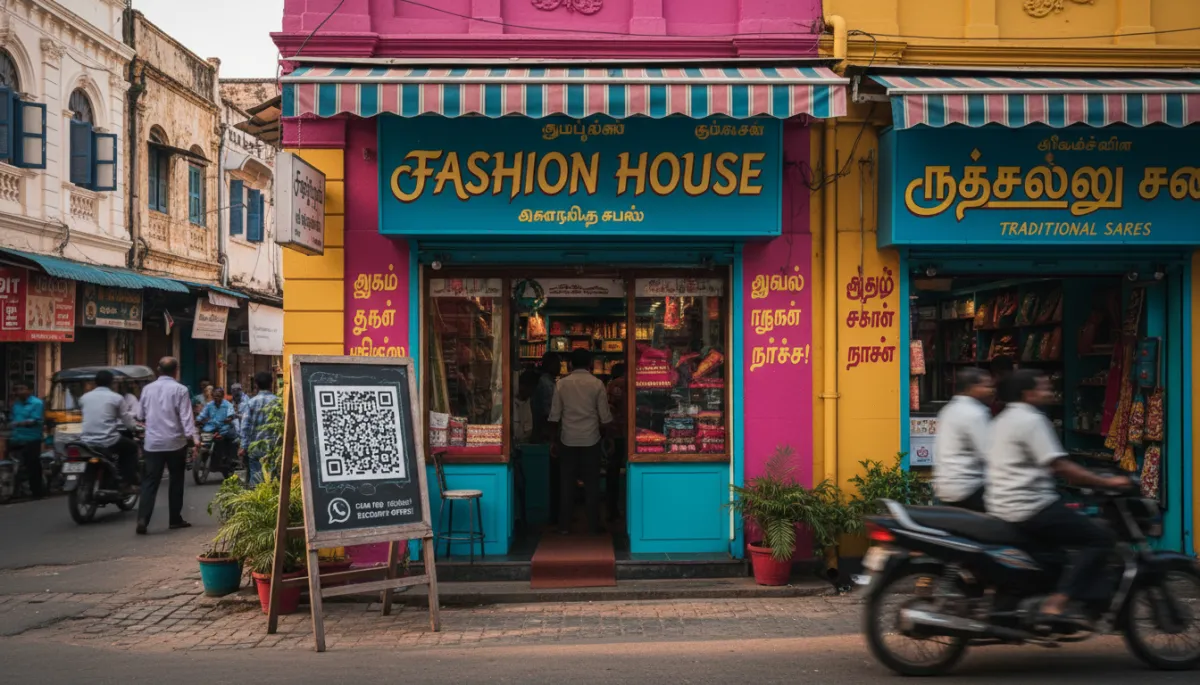
WhatsApp Marketing Automation Chennai: A Practical Guide for Small Businesses
WhatsApp Marketing, Small Business, Chennai, Automation, Local Marketing
WhatsApp Marketing Automation Chennai: A Practical Guide for Small Businesses
WhatsApp Marketing Automation Chennai: A Practical Guide for Small Businesses is written for owners of small, hard-working teams across the city who want professional results without enterprise-level costs. In this guide, you’ll get a realistic, budget-conscious, step-by-step plan to set up WhatsApp automation that actually fits a Chennai business with 1–10 people. No jargon, no big-agency fluff—just clear examples, simple workflows, and tools you can start using this week.
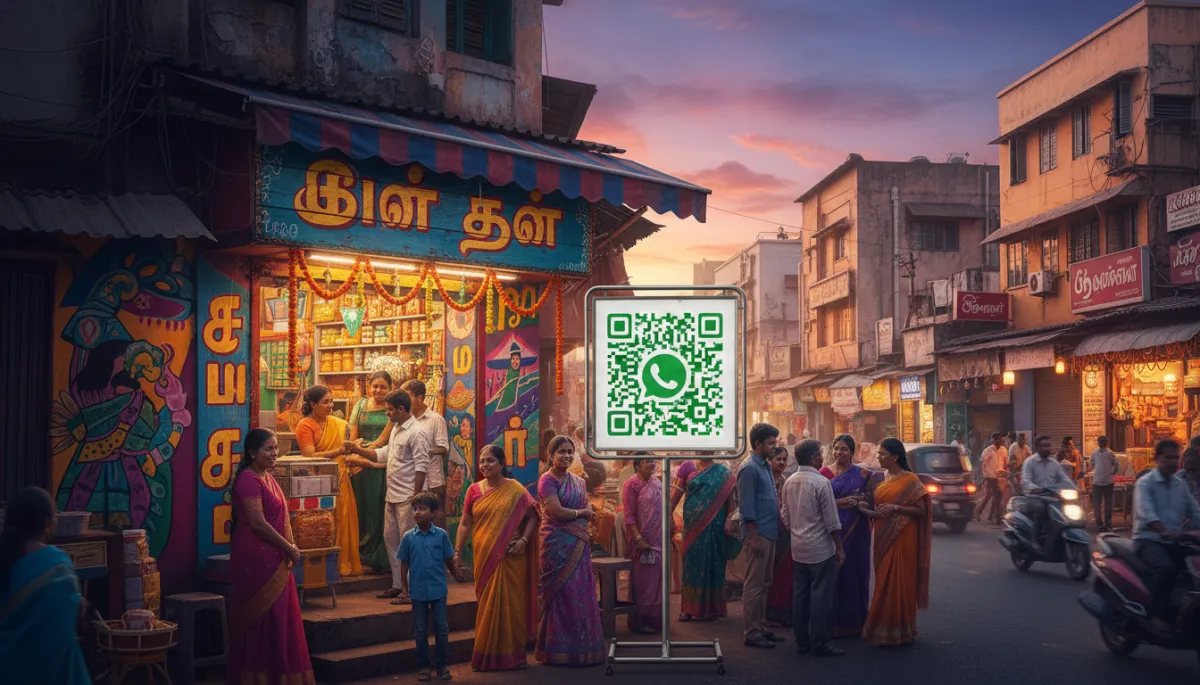
Our team at RevMax works with small Chennai businesses every week—2-person boutiques in Mylapore, solo tutors in Chromepet, family restaurants in Perambur, clinics in Velachery, and salons in T. Nagar. The pattern is always the same: customers are on WhatsApp all day, but owners are stuck manually replying, forgetting follow-ups, and losing hot leads. This guide shows you how to fix that with practical WhatsApp marketing automation that respects your time, your budget, and your customers.
Why WhatsApp Marketing Automation Is Perfect for Small Chennai Businesses
If you run a small business in Chennai, you already know this: your customers prefer WhatsApp over calls and emails. A national survey of local businesses across Indian cities found that about 73% of customers prefer WhatsApp for queries, and WhatsApp-active customers spend more than double compared to non-WhatsApp customers (Vayapar.ai, 2026). For Chennai’s busy, mobile-first customers, WhatsApp is where decisions happen.
That’s exactly why automation matters. According to Marketo (2023), small businesses that adopt marketing automation grow 3.5x faster than those relying only on manual processes. In India, WhatsApp delivers the highest ROI of any mobile marketing channel—about ₹18 return for every ₹1 spent (Emerald Insights India, 2023). When you combine those two facts, you get a clear strategy: automate your WhatsApp, even if you’re tiny today.
For a 2-person boutique in Mylapore, that can mean fewer missed enquiries when both of you are with customers. For a family restaurant in Perambur, it means automated daily specials, reservation confirmations, and feedback requests without someone sitting with the phone all day. For a solo tutor in Chromepet, it means enquiry follow-ups, demo reminders, and fee reminders going out on time—even during exam season when you’re teaching non-stop.
Busting the Myths: WhatsApp Automation Isn’t Just for Big Companies
Many Chennai owners tell us the same three fears during RevMax onboarding calls:
- “Automation is only for big brands with IT teams.”
- “My customers will think it’s a robot and feel irritated.”
- “It must be very expensive and complicated to set up.”
None of these are true anymore. In 2026, Meta launched Business AI inside the WhatsApp Business app in India, giving small businesses no-code automation for FAQs, lead capture, and bookings—right from the app (Meta, 2026). Modern tools like RevMax Studio for WhatsApp automation in Chennai sit on top of this and make it even simpler with ready-made flows and Tamil/English support. You don’t need coding, servers, or a full-time tech person. You just need clarity on what you want to automate first.
Another myth is that customers hate automated messages. In reality, 72% of Indian consumers have made a purchase after receiving a WhatsApp message from a business (Meta India, 2023). The problem is not automation itself—it’s spammy, irrelevant, or too-frequent messages. When you keep it helpful, timely, and permission-based, customers appreciate the speed and clarity. Your job is to use automation to answer faster and follow up better, not to bombard people all day.
Your First 3 WhatsApp Marketing Automations (Start Here)
Automation 1 — The Instant Enquiry Response
This is the most important and easiest automation to set up. Whenever someone messages your business number for the first time—through your website, QR code, or Instagram—your system should instantly reply with a friendly, clear message and capture basic details. This alone can stop you from losing hot leads when you’re busy or closed.
Example for a 2-person boutique in Mylapore:
“Hi! 👋 Thanks for messaging Anjalai Boutique, Mylapore. I’m Anjali. We specialise in custom blouses and saree fall stitching. Please reply with: 1) What are you looking for? 2) When do you need it? 3) Your name. I’ll get back to you within 30–60 minutes during working hours.”
A platform like RevMax Studio’s WhatsApp automation for Chennai can store these replies as leads in a simple CRM, tag them (e.g., “bridal”, “alteration”), and remind you to follow up. Our data shows that businesses using an instant enquiry response and follow-up flow convert leads 3.1x better than those replying manually whenever they remember (RevMax SMB data, 2024).
Automation 2 — The Welcome and Introduction Sequence
After someone opts in to hear from you (by scanning a QR code, filling a form, or clicking a WhatsApp link), don’t just say “Hi” and disappear. Use a short, 2–3 message welcome sequence over the next 24–48 hours to introduce your business, set expectations, and offer a simple first step.
- Message 1 (Instant): Thank them, introduce who you are, and confirm they’ll receive helpful updates—not spam.
- Message 2 (After a few hours): Share 1–2 key benefits or popular services, maybe with a short menu of options they can reply with.
- Message 3 (Next day): Offer a low-friction first step: a free consultation slot, a small discount, or a helpful PDF/checklist.
For example, a solo tutor in Chromepet can send a welcome message, then a list of available subjects and time slots, followed by a link to book a free 15-minute demo class. This builds trust and moves the conversation from “just enquiry” to “serious prospect” without you manually typing the same details 20 times a week.
Automation 3 — The Weekly Value Message (Broadcast)
Once you have a small list of customers and prospects who agreed to receive updates, you can send a weekly or fortnightly broadcast. This is not about pushing offers every time. It’s about sharing useful, short value that keeps your brand top-of-mind and gently nudges people to buy or book again.
In India, WhatsApp broadcasts often see 70–98% open rates and 5–15% conversion rates when done right (VGraple, Scalify Labs, iMarkInfotech, 2026). With automation, you can prepare 4–8 messages in advance and schedule them. For a family restaurant in Perambur, that might be:
- Week 1: “3 tips to enjoy healthier South Indian dinners” + link to your light tiffin menu.
- Week 2: “Today’s special combo & free dessert for WhatsApp customers.”
- Week 3: “Behind the scenes: how we prepare our Sunday biryani.”
Growing Your WhatsApp Subscriber List the Right Way
Adding a WhatsApp Opt-In to Your Website or Instagram Bio
The best WhatsApp list is permission-based. If you have a website, add a clear button like “Chat with us on WhatsApp” that opens a pre-filled message. If you don’t have a website, use your Instagram bio, Facebook page, or Google Business Profile link. Make the benefit clear:
- “Get exclusive WhatsApp-only offers and early access.”
- “Book appointments faster via WhatsApp.”
On Instagram, you can run simple story posts: “Reply ‘LIST’ to join our WhatsApp list for weekly tips and offers.” Once they message, your automation can tag them and send the welcome sequence. For templates and ready-to-use captions, follow @revenuemasteryconsulting on Instagram and revenue-mastery-consultings on LinkedIn; they regularly share small-business-friendly WhatsApp campaign ideas you can copy and adapt.
Using QR Codes at Your Physical Location
QR codes are exploding in India. Statista India (2024) reports that QR code opt-ins for WhatsApp grew by 180% among Indian retail businesses in just one year. For Chennai’s high-footfall shops, clinics, gyms, and restaurants, this is low-hanging fruit. Place a QR code at your billing counter, entrance, and tables with a simple message:
- “Scan to get today’s offer on WhatsApp.”
- “Scan to join our VIP WhatsApp list for festival deals.”
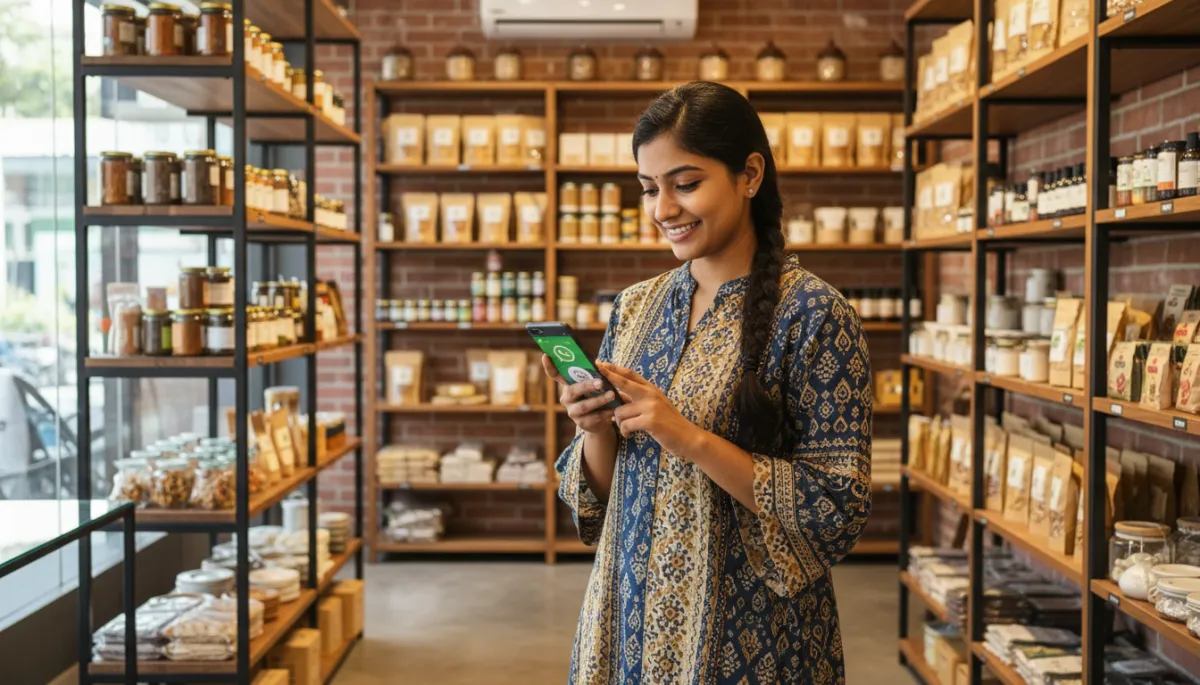
Even a one-person shop can look and feel professional with simple WhatsApp automation.
When customers scan, they’re taken to a WhatsApp chat with a pre-filled message like “Hi, I want to join your WhatsApp list.” Your automation then confirms consent and adds them to the right segment—walk-in customer, VIP, or first-time visitor. Over time, this becomes an owned audience you can reach without paying for ads every time.
Running a WhatsApp-Exclusive Offer to Drive Opt-Ins
People don’t join lists “just like that.” Give them a clear, limited-time reason. For example:
- A salon in T. Nagar offers “Scan & join our WhatsApp list for one-time 15% off on any facial this month.”
- A coaching centre in Anna Nagar offers “Join our WhatsApp list to get free sample question papers every Friday.”
Run these offers on your signage, bills, social media, and even with a small printed card inside delivery orders. Make it clear that the benefit is WhatsApp-only so people feel they’re getting something special by opting in.
Low-Budget WhatsApp Marketing That Punches Above Its Weight
Festival and Seasonal Campaigns (Pongal, Diwali, New Year)
In India, festival time is business time. Kaleyra India (2023) found that festival-themed WhatsApp campaigns see 2.3x higher engagement than non-seasonal messages. For a Chennai business, that means Pongal hampers, Aadi sale, Diwali gifting, New Year offers, and even local events like Margazhi music season can be turned into simple automated campaigns.
- Pre-schedule your Pongal, Diwali, and New Year greetings with a soft offer (e.g., “Show this message for 10% off before Sunday.”)
- Create a simple 3-message festival sequence: announcement, reminder, last-day nudge.
You don’t need a designer for this. Text-only messages with one clear visual (if needed) and a strong call-to-action are enough. For more ideas, check out RevMax’s blog on 10 WhatsApp campaign ideas perfect for small businesses.
Customer Birthday and Anniversary Messages
Birthday and anniversary messages are one of the simplest automations with surprisingly strong ROI. Twilio (2023) reports that birthday messages via WhatsApp have a 68% open rate and generate repeat purchases in 22% of cases. For a small Chennai business, that’s a low-effort way to turn one-time customers into regulars.
- Collect birthdays at checkout or during onboarding (“Share your birthday to get a surprise from us.”)
- Set an automation to send a personalised greeting plus a small offer—flat discount, free dessert, or bonus add-on.
A Perambur restaurant, for example, can send: “Happy Birthday, Priya! 🎉 We’re wishing you a wonderful year. Visit us this week and show this message for a free dessert with any main course.” Simple, warm, and effective.
Referral and Review Request Flows
Referral marketing is a quiet powerhouse. Nielsen (2023) found that referrals generate 3–5x higher conversion rates than any paid channel. You can automate this gently on WhatsApp:
- After a successful purchase or service, send a timed message asking for feedback and a Google review link.
- If they rate you positively, send a follow-up: “Do you have a friend who would benefit from this? Share this link and both of you get ₹X off.”
Over a few months, this compounds into more reviews, better local SEO, and steady word-of-mouth—all driven by automated, polite WhatsApp nudges instead of awkward manual requests.
Tools and Budget: What a Small Chennai Business Actually Needs
Let’s talk money and tools, without sugar-coating. Across India, small businesses typically spend around ₹3,000–8,000 per month on WhatsApp marketing automation tools (RevMax data, 2024). This usually includes:
- A WhatsApp Business API or Business AI-enabled number.
- A platform to manage broadcasts, automation flows, and basic CRM.
- Per-message charges for marketing templates (roughly ₹0.80–₹1 per message including GST, depending on provider and volume).
For a 1–10 person Chennai business, you do not need the most complex, enterprise-grade tool. You need:
- Easy templates for enquiry replies, welcome flows, and broadcasts.
- Simple tagging (e.g., “New lead”, “Regular customer”, “High-value”).
- Basic reports: how many messages sent, delivered, read, and clicked.
Platforms like https://studio.revmaxapp.com/whatsapp-automation-chennai are built specifically for small Chennai businesses that want affordable WhatsApp marketing in India without dealing with raw APIs, complex dashboards, or hidden markups. You get pre-built flows tuned for local use-cases, Tamil/English support, and onboarding help from a team that talks your language and understands your constraints.
Common Small Business Mistakes in WhatsApp Marketing Automation
After helping dozens of Chennai businesses set up automation, we see the same avoidable mistakes again and again:
- No clear opt-in: Adding people without consent leads to blocks and spam complaints. Remember, 96% of Indian users already receive daily spam (LocalCircles, 2026). Don’t become part of that problem.
- Too many broadcasts: Sending offers every other day quickly annoys people. A healthy starting point is weekly or fortnightly, unless you’re in a category like food delivery with daily relevance.
- No follow-up system: Owners reply to new leads, then forget to follow up. That’s exactly what automation should fix. Even a simple 2-step reminder sequence can rescue many lost deals.
- Overcomplicating flows: Trying to build a full AI chatbot from day one usually ends in confusion. Start with 2–3 simple flows, then expand. Our article on common mistakes small businesses make with WhatsApp automation dives deeper into this.
If you’d like a broader overview before you dive in, you can also read this before starting WhatsApp automation or explore our complete guide to WhatsApp automation for Chennai businesses for more strategic context.
Frequently Asked Questions
1. Can a solo business owner manage WhatsApp marketing automation alone?
Yes. In fact, many of our most successful RevMax clients are solo owners—a home baker in Adyar, a freelance designer in Nungambakkam, a personal trainer in Tambaram. Once the initial flows are set up, your main work is:
- Checking replies and continuing real conversations.
- Planning 1–2 broadcasts per month.
With a tool that’s designed for non-technical users, you can manage this in 30–60 minutes per week. Our article on stop losing leads with WhatsApp CRM explains how solo owners can stay organised without feeling overwhelmed.
2. What is the minimum budget required to start WhatsApp marketing automation in Chennai?
If you’re extremely tight on funds, you can begin with:
- WhatsApp Business app (free) for basic quick replies and labels.
But to get true automation—flows, broadcasts, and CRM—you should plan at least ₹3,000–4,000 per month to start. As campaigns begin to return ₹18 or more per ₹1 spent (Emerald Insights India, 2023), this budget quickly pays for itself. Tools like RevMax Studio for WhatsApp automation Chennai are built to keep this affordable for small teams.
3. Do I need a website to run WhatsApp marketing automation as a small business?
No. A website helps, but it’s not mandatory. Many Chennai businesses we onboard start with:
- Instagram and Facebook pages with a WhatsApp link in the bio.
- Google Business Profile with “Chat via WhatsApp” enabled.
- QR codes in-store and on printed materials.
You can always add a website later. Automation works wherever your customers can click or scan to start a WhatsApp chat.
4. How often should a small business send WhatsApp marketing messages?
As a starting rule for Chennai small businesses:
- 1 value-focused broadcast per week or 2 per month.
- Additional messages only for important updates, festival campaigns, or time-sensitive offers.
Monitor your unsubscribe/block rates. If they stay low and your engagement remains strong, you can increase slightly. Our article on how to grow without any manual follow-ups explains how to find your own “sweet spot” for frequency.
5. Can I use WhatsApp marketing automation for a service business (not just product-based)?
Absolutely. In Chennai, we see some of the best results from service businesses: clinics, salons, coaching centres, real estate agents, consultants, and fitness trainers. Automation can handle:
- Appointment reminders and confirmations.
- Follow-up care instructions or class materials after sessions.
- Feedback, reviews, and referral requests.
If you’re curious about the AI side of this, read our article on what small business owners need to know about AI WhatsApp tools, which explains how even small service businesses can use AI safely and effectively.
Start Small, Scale Fast (CTA)
You don’t need a 50-step chatbot or a huge budget to get results from WhatsApp marketing automation as a small business in Chennai. You just need to:
- Set up 3 basic automations: instant enquiry reply, welcome sequence, and weekly/fortnightly value broadcast.
- Grow your list the right way using opt-ins, QR codes, and simple WhatsApp-only offers.
- Use low-budget, high-impact campaigns—festivals, birthdays, referrals—to keep customers coming back.
As you grow more confident, you can explore advanced flows like abandoned-cart recovery, in-chat payments, and AI-powered FAQs. Our guide on everything a small business needs to know before starting and the broader complete guide to WhatsApp automation for Chennai businesses will help you plan that next stage.
When you’re ready to stop losing leads, missing follow-ups, and manually typing the same replies every day, it’s time to let a simple system do the heavy lifting. Start your small business WhatsApp marketing automation at https://studio.revmaxapp.com/whatsapp-automation-chennai — affordable, fast, and no tech skills needed. With the right setup, WhatsApp can become your most reliable, highest-ROI channel for steady, predictable growth in Chennai’s competitive market.


