WhatsApp CRM Chennai: Never Lose Another Lead Again
CRM, WhatsApp CRM Chennai, Lead Automation, Software, Chennai
WhatsApp CRM Chennai: Never Lose Another Lead Again
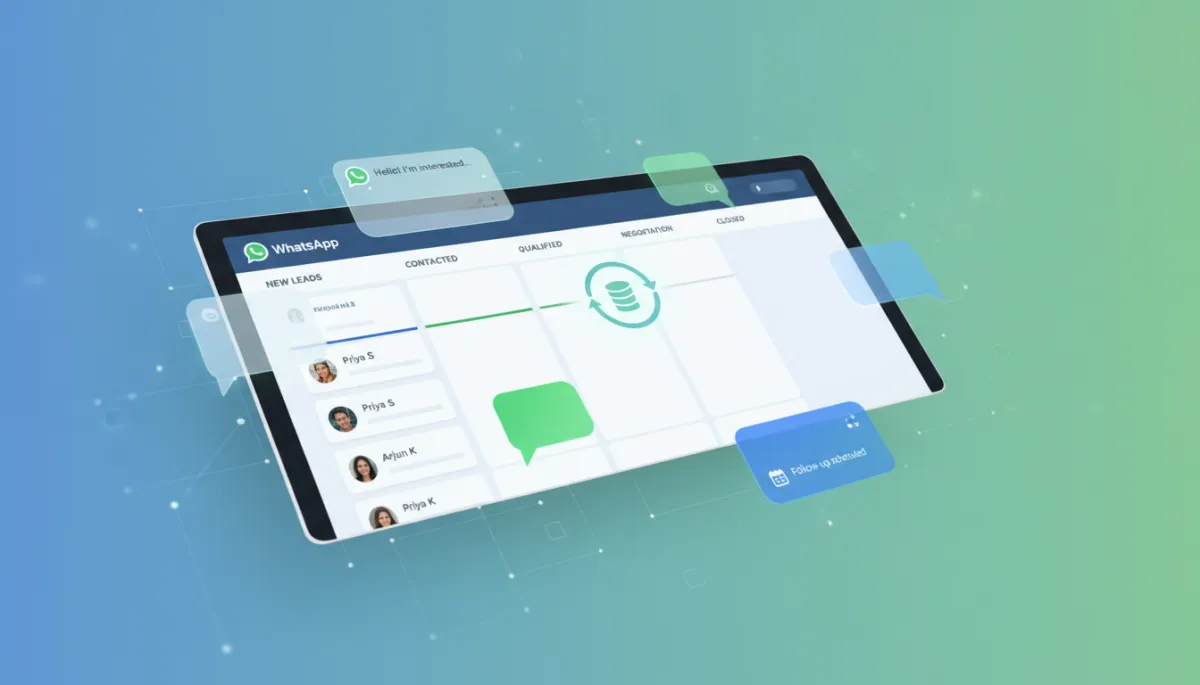
WhatsApp CRM Chennai: Never Lose Another Lead Again is not just a catchy promise – it’s the difference between a packed sales pipeline and a silent phone. In this blog, you’ll see exactly how Chennai businesses can stop losing leads to slow follow-ups, forgotten messages, and disorganised chat inboxes by connecting WhatsApp directly to a CRM system. We’ll walk through real numbers, real Chennai scenarios, and a clear roadmap to turn every WhatsApp enquiry into a tracked opportunity instead of a missed chance.
The Real Cost of Losing a Lead in Chennai's Competitive Market
In Chennai’s crowded markets – from OMR tech corridors to T. Nagar retail and Velachery healthcare – every enquiry on WhatsApp carries real revenue. Yet most businesses underestimate how much silent lead leakage is costing them every month. According to MarketingSherpa (2023), businesses lose 79% of marketing leads simply because there is no proper follow-up. NASSCOM (2023) reports that in Indian SMEs, only 27% of leads are ever contacted after the initial enquiry. That means nearly three out of four people who message you may never hear back properly – not because you don’t care, but because your system is broken.
In Chennai, where customers compare 3–5 providers before deciding, this gap is deadly. Drift (2023) found that 68% of customers who don’t get a timely follow-up go straight to a competitor. Think about a Nungambakkam interior designer losing 12 leads per month to unread WhatsApp messages. If each project is worth even ₹1.5–2 lakhs, that’s ₹18–24 lakhs in potential revenue slipping away every single month – not because of poor work, but because messages got buried under family chats and group forwards. We’ve helped Chennai businesses recover ₹15–40 lakhs in pipeline value just by implementing a robust WhatsApp CRM and fixing this invisible leakage.
CRM users globally see a 29% increase in sales, 34% improvement in sales productivity, and 40% better forecast accuracy (Salesforce State of Sales, 2023). Nucleus Research (2023) adds that businesses using CRM are 86% more likely to hit their sales quota than those operating without one. When WhatsApp – your most active channel – is plugged into CRM instead of running separately on someone’s phone, those gains become very real in a Chennai context: more site visits booked, more demos scheduled, more treatments confirmed, and fewer “Sorry, I missed your message” moments.
Why Chennai Businesses Lose Leads on WhatsApp (The Honest Reasons)
Too Many Conversations, Not Enough Organisation
For most Chennai owners and sales teams, WhatsApp has quietly become the main operating system. New enquiries from Justdial, MagicBricks, Instagram, walk-ins, and referrals all land there. After 30–40 active chats, the inbox becomes chaos. You scroll, search, star, and label – but when 10 new messages arrive in the next hour, yesterday’s hot lead disappears below the fold. Reddit threads from Indian founders echo the same pain: WhatsApp feels manageable until volume spikes, then it becomes a mess you can’t control without systems.
Relying on Memory Instead of Systems
Many Chennai teams still rely on memory, notebooks, or Excel to track follow-ups. You tell yourself, “I’ll call this lead after lunch,” or “I must send the brochure tomorrow.” Then a supplier issue, staff problem, or urgent client call hits, and that promise vanishes. By the time you remember, the lead has already booked with someone else in the city. This isn’t a discipline issue; it’s a system issue. Human memory cannot compete with a structured CRM that automatically schedules and tracks every next step for every WhatsApp lead.
No Follow-Up Triggers When Leads Go Quiet
The hardest part of WhatsApp lead management is the “silent middle.” A prospect asks for pricing, you reply, and then they go quiet. Without a system, that conversation simply dies. However, research shows that most deals are closed after 5–8 touchpoints, not after the first reply. When there are no automated follow-up triggers – no reminder after 24 hours, no gentle nudge after 3 days, no final check-in after a week – your pipeline is full of half-finished conversations that never move to closure. The result is a bloated, misleading sense of “we have many enquiries” but very few confirmed sales.
Multiple Staff, No Unified Inbox
Once you have even two or three team members handling WhatsApp, the confusion doubles. One person replies from their phone, another follows up later from the office, and the owner occasionally jumps in from their number. Without a unified CRM inbox, you get duplicate conversations, inconsistent answers, and lost context. Zendesk (2023) reports that teams using a unified CRM inbox for WhatsApp see 45% fewer duplicate conversations and 38% higher team efficiency. In Chennai’s fast-moving sectors like real estate and coaching, that efficiency is the difference between closing the lead before the weekend or losing it by Monday morning.
What Is a WhatsApp CRM and How Does It Work?
A WhatsApp CRM is a system that connects your WhatsApp Business account to a central customer relationship management platform. Instead of chats living only on a single phone, every message becomes a structured lead in your CRM – with name, number, source, tags, follow-up tasks, and pipeline stage. For Chennai businesses, this means your most active communication channel finally plugs into your sales engine instead of sitting outside it as an untracked black box.
Technically, most modern solutions in India use the WhatsApp Business API to stream messages into the CRM, assign them to team members, and trigger automated workflows. Industry research shows that WhatsApp CRM integration can cut lead response time from hours to seconds, because the system can send instant acknowledgements, route chats based on rules, and alert the right salesperson the moment a new enquiry lands. As we approach 2026, WhatsApp has become the primary CRM hub for Indian SMBs, with nearly 80% using it for customer communication and enjoying open rates close to 98%, compared to ~22% for email.
Platforms like https://studio.revmaxapp.com/whatsapp-automation-chennai are built specifically to help Chennai businesses plug WhatsApp into a powerful CRM layer. Instead of manually copying numbers from chats into spreadsheets, the system auto-creates leads, logs every message, and gives your team a single place to see who needs attention next. If you want a complete guide to WhatsApp automation for Chennai or to understand what actually works in WhatsApp automation in 2026, those deep dives will help, but this article focuses on one core promise: never losing another WhatsApp lead again.
How WhatsApp CRM Integration Stops Lead Leakage
Auto-Capture Every Lead from WhatsApp into CRM
The first step to stopping leakage is simple but powerful: no lead should stay only inside WhatsApp. With a proper WhatsApp CRM integration, every new conversation automatically creates or updates a lead in your CRM. There is no copy-paste, no manual data entry, and no risk of “I forgot to save that number.” For Chennai real estate agents, where MagicBricks (2023) reports over 12,000 active agents managing leads across calls, email, and WhatsApp, this auto-capture alone can transform daily operations. Every enquiry from your website, Justdial listing, or ad that ends up on WhatsApp is instantly recorded and tagged with the right source.
Assign Leads to the Right Team Member Instantly
The second layer is routing. A good WhatsApp CRM lets you define rules: OMR property leads go to the OMR team, Velachery clinic enquiries go to the front office coordinator, Anna Nagar coaching leads go to the counsellor. As soon as a lead messages you, the CRM assigns it to the right person and notifies them – no manual forwarding, no confusion about who should reply. This matters because research from Indian SMB benchmarks shows that responding to leads within 5 minutes leads to 3.7× more deals closed compared to waiting an hour or more. Assignment rules and instant alerts make that speed-to-lead target realistic even for busy Chennai teams.
Automated Follow-Up Triggers Based on Lead Status
The third layer is automation. With WhatsApp CRM, you can define follow-up journeys based on lead status. For example:
- If a new lead doesn’t reply within 24 hours, send a gentle reminder and create a task for the salesperson.
- If a prospect asks for pricing, schedule a follow-up in two days to check if they have questions.
- If a site visit or consultation is booked, send automated confirmations and reminders via WhatsApp.
Instead of waiting for your memory to fire, the system drives the follow-up. This is the heart of WhatsApp follow-up automation Chennai – using templates, triggers, and workflows so that no potential customer feels ignored or forgotten. If you want to explore how automation can free your team’s time, see our article on 7 ways automation saves Chennai businesses hours weekly.
Full Conversation History Visible to Every Team Member
When WhatsApp is tied to CRM, every message – text, voice note, photo, document – is stored against the lead record. If a salesperson is on leave, someone else can open the CRM and see exactly what was promised, what the customer asked, and what the next step is. No more “Can you forward me the chat?” or “What did they say last week?” This shared context is crucial for Chennai teams where staff turnover or shift rotations are common. It also protects you from miscommunication and ensures a consistent, professional experience for the customer, no matter who replies.
Lead Pipeline View — See Every Deal in One Place
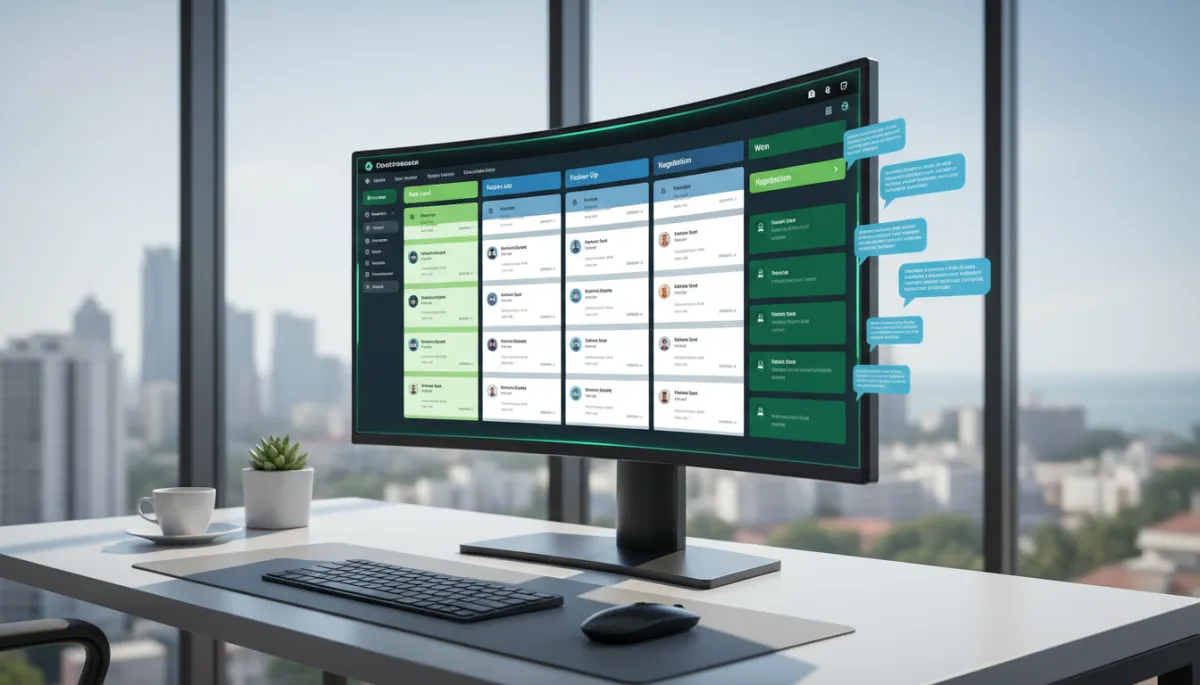
Finally, a WhatsApp CRM gives you a pipeline view: columns like New Enquiry, Qualified, Follow-Up, Meeting Booked, Proposal Sent, Won, and Lost. Every WhatsApp lead sits in one of these stages, and you can drag and drop as they move forward. This pipeline view changes the way Chennai business owners think about growth. Instead of asking, “How many messages did we get today?” you can ask, “How many new enquiries moved to proposal stage this week?” If you want a deeper visual explanation, read our article on how to manage every lead in one place with WhatsApp CRM.
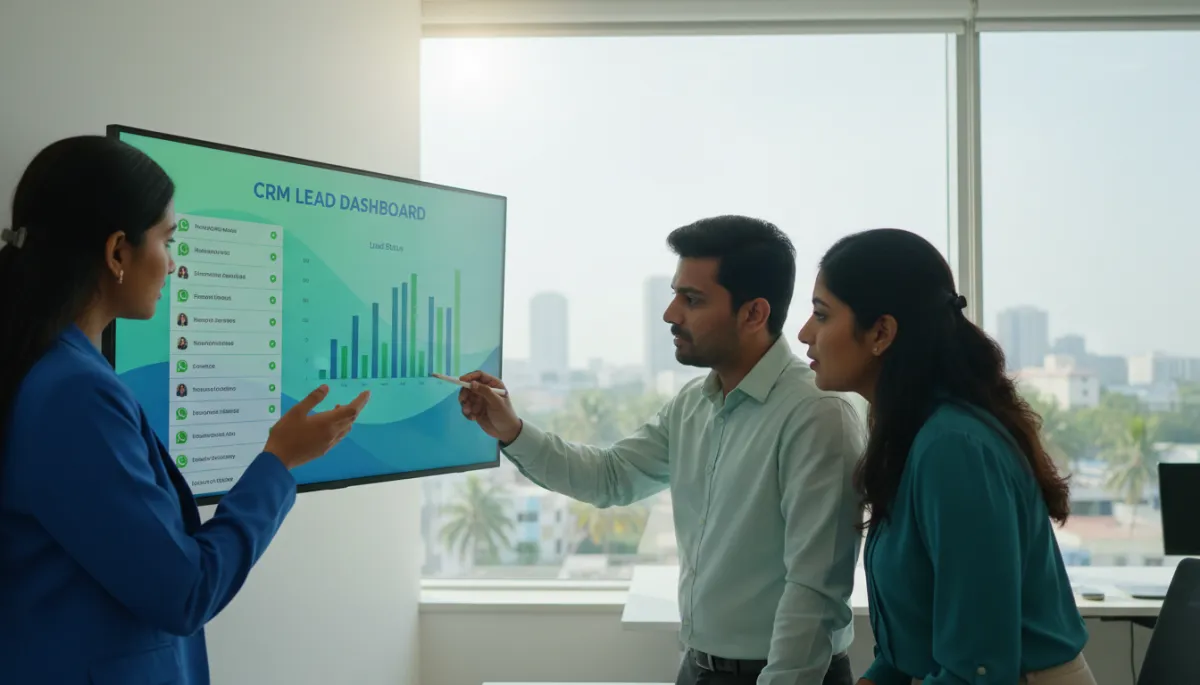
Chennai teams using a unified WhatsApp CRM inbox cut duplicate conversations and boost efficiency.
Real Business Scenarios: WhatsApp CRM in Action for Chennai
Real Estate Agency in OMR
An OMR-based real estate agency handles enquiries from MagicBricks, 99acres, and walk-in referrals. Before WhatsApp CRM, each agent managed leads on their personal phone. Clients often contacted multiple agents from the same firm, leading to duplicate conversations, conflicting prices, and frustrated buyers. Follow-ups for site visits were inconsistent; if an agent was busy on a weekend, messages piled up. With over 12,000 agents in the Chennai market, this agency was constantly losing hot buyers to faster competitors.
After implementing WhatsApp CRM via https://studio.revmaxapp.com/whatsapp-automation-chennai, every enquiry from listing portals and ads now flows into a central CRM. Leads are auto-assigned by project and location, with instant WhatsApp acknowledgements sent from a verified business profile. Site visit reminders are automated, and the manager can see exactly how many buyers are at each stage: Enquiry, Site Visit, Negotiation, Booking. Within three months, the agency saw a 31% improvement in conversion rate and far fewer “Sorry, we already booked with another builder” messages.
Coaching Centre in Anna Nagar
An Anna Nagar coaching centre running NEET and JEE batches relied heavily on WhatsApp for parent enquiries, demo class bookings, and fee reminders. During admission season, they received 50–80 WhatsApp enquiries per day. The counsellor tried to keep track using stars and labels, but many parents who asked for fee details never received a structured follow-up. Only the most persistent parents enrolled; the rest quietly moved to other institutes that followed up more consistently.
With WhatsApp CRM in place, every new enquiry is tagged by course and grade. Automated flows send brochures, demo class links, and reminder messages. The system alerts counsellors to call parents who haven’t confirmed within 48 hours. Management can see a clear pipeline from Enquiry to Enrolment and identify which counsellors convert best. The result: more predictable admissions, higher batch fill rates, and less pressure on the team to remember every single follow-up manually. For more on this kind of automation, see how how Chennai businesses respond faster to every lead.
Clinic in Velachery
A multi-speciality clinic in Velachery used WhatsApp for appointment bookings, lab report updates, and follow-up reminders. Front desk staff handled all chats from a single phone. When the clinic was busy, messages went unread for hours. Patients who enquired about specific treatments often dropped off because there was no systematic follow-up to book a consultation. The clinic’s doctors were convinced “demand is low,” but the real problem was unmanaged demand on WhatsApp.
After integrating WhatsApp with CRM, the clinic created dedicated pipelines for New Enquiry, Consultation Booked, Treatment Plan, and Review Visit. Automated reminders went out for appointments and post-treatment check-ins. Staff could handle chats from multiple devices via a unified inbox, and every patient conversation was logged with notes. Within a quarter, the clinic saw more repeat visits, better utilisation of doctor slots, and a clear understanding of how many enquiries were converting into paying patients – all driven by structured WhatsApp lead management Chennai instead of ad-hoc replies.
What to Look for in a WhatsApp CRM for Your Chennai Business
Not every tool that claims “WhatsApp CRM integration” is ready for real Chennai volumes. When you evaluate options, focus on these essentials to ensure you truly never lose another lead:
- Official WhatsApp Business API integration: This ensures reliability, compliance with Indian regulations, and the ability to scale beyond a single device. Avoid “workarounds” that can lead to number bans or message delivery issues.
- Unified inbox for teams: Multiple team members should be able to handle WhatsApp conversations from one CRM account with clear ownership, internal notes, and no duplicate replies.
- Lead pipeline and tagging: You must be able to see every lead by stage (New, Follow-Up, Proposal, Won, Lost) and filter by campaign, location, or product for accurate reporting and forecasting.
- Automation and templates: Look for robust automated follow-ups, reminders, and broadcast capabilities using approved WhatsApp templates, especially for high-volume periods like launches or admission seasons.
- Local support and Chennai context: Your provider should understand local lead sources (MagicBricks, Justdial, IndiaMART, Instagram), payment habits (UPI, bank transfer), and regulatory requirements (DPDP, opt-ins).
A platform like https://studio.revmaxapp.com/whatsapp-automation-chennai is designed around these realities, helping you integrate WhatsApp into a CRM stack that supports CRM for WhatsApp Business India, rather than forcing you into a generic global model. If you’re ready for deeper implementation details, explore our complete WhatsApp CRM setup guide for Chennai businesses and learn how to grow without manual follow-ups.
Frequently Asked Questions
1. What is the difference between WhatsApp Business and a WhatsApp CRM?
WhatsApp Business is a messaging app – it lets you chat with customers, set a profile, and use basic labels. A WhatsApp CRM is a full lead management system that connects those chats to a database of leads, deals, tasks, and reports. With just WhatsApp Business, your leads live on one phone and depend on that person’s memory. With a WhatsApp CRM, every enquiry becomes a structured record with owner, stage, value, and follow-up schedule. If you want to see how this looks in practice, read our article on whether AI can replace your manual follow-ups entirely.
2. Can multiple team members manage WhatsApp leads from one CRM account?
Yes. That’s one of the biggest advantages of WhatsApp CRM. Instead of one device and one person, your whole sales or service team can access a unified inbox, see assigned conversations, and respond from the same official business number. Each conversation has a clear owner, but managers can monitor, reassign, or jump in when needed. This is essential for Chennai teams with field sales, shift-based staff, or multi-location operations that cannot depend on a single phone at the front desk.
3. Does WhatsApp CRM integration require the WhatsApp Business API?
In most serious implementations, yes. The official WhatsApp Business API is what allows messages to flow reliably into the CRM, support multiple agents, and trigger automated notifications at scale. While there are unofficial hacks that try to “mirror” your phone, they are risky and can violate WhatsApp’s terms, leading to number bans. For Chennai businesses planning to grow, it’s safer to work with an API-based solution that handles compliance, template approvals, and scaling properly.
4. How does a WhatsApp CRM send automatic follow-up messages?
A WhatsApp CRM uses workflows and templates. You define rules like “If a new lead is created from WhatsApp and no reply is received in 24 hours, send Template A” or “If a consultation is scheduled, send a reminder 3 hours before.” The system then uses approved WhatsApp templates to send those messages automatically, while logging them in the lead’s history. This kind of automation is at the heart of lead tracking WhatsApp Chennai, ensuring that every prospect gets timely, consistent communication without your team manually typing the same messages hundreds of times.
5. How much does WhatsApp CRM integration cost for a small Chennai business?
Costs vary based on the number of users, message volume, and features, but most small Chennai businesses can start with a WhatsApp CRM for a few thousand rupees per month. When you compare this to the value of even a single recovered deal – a real estate booking, a full-year coaching enrolment, a treatment package – the ROI is compelling. Given that businesses with CRM are 86% more likely to hit sales targets (Nucleus Research, 2023) and WhatsApp integration can cut response times from hours to seconds, the investment is usually recovered quickly through saved leads and higher conversion rates.
Stop Losing Leads — Set Up WhatsApp CRM Today (CTA)
If you feel that sinking feeling when you realise you forgot to reply to a hot WhatsApp enquiry, you are not alone. Chennai’s most ambitious businesses – from Nungambakkam designers to OMR agencies and Velachery clinics – are all battling the same invisible enemy: lead leakage. The difference is that some have already moved their WhatsApp into a CRM and stopped relying on memory, while others are still hoping stars and labels will be enough. The data is clear: 79% of leads are lost to poor follow-up, only 27% are contacted after the first touch, and 68% of ignored customers go straight to your competitors. You cannot afford to keep operating like this in 2026.
We’ve helped Chennai businesses recover ₹15–40 lakhs in pipeline value simply by connecting WhatsApp to a CRM, building smart follow-up journeys, and giving teams a unified inbox. You can do the same. Stop losing leads today — set up your WhatsApp CRM at https://studio.revmaxapp.com/whatsapp-automation-chennai and turn every single enquiry into a tracked opportunity. If you want to go deeper, explore how to manage every lead in one place with WhatsApp CRM and our complete guide to WhatsApp automation for Chennai so you can respond faster to every lead and grow without manual follow-ups.
For ongoing tips, templates, and real examples of WhatsApp lead management Chennai businesses are using right now, follow @revenuemasteryconsulting on Instagram and connect on LinkedIn at revenue-mastery-consultings. You’ll see practical breakdowns of what actually works in WhatsApp automation in 2026 and how to use CRM and AI so you never watch another valuable lead disappear into your chat history again.


