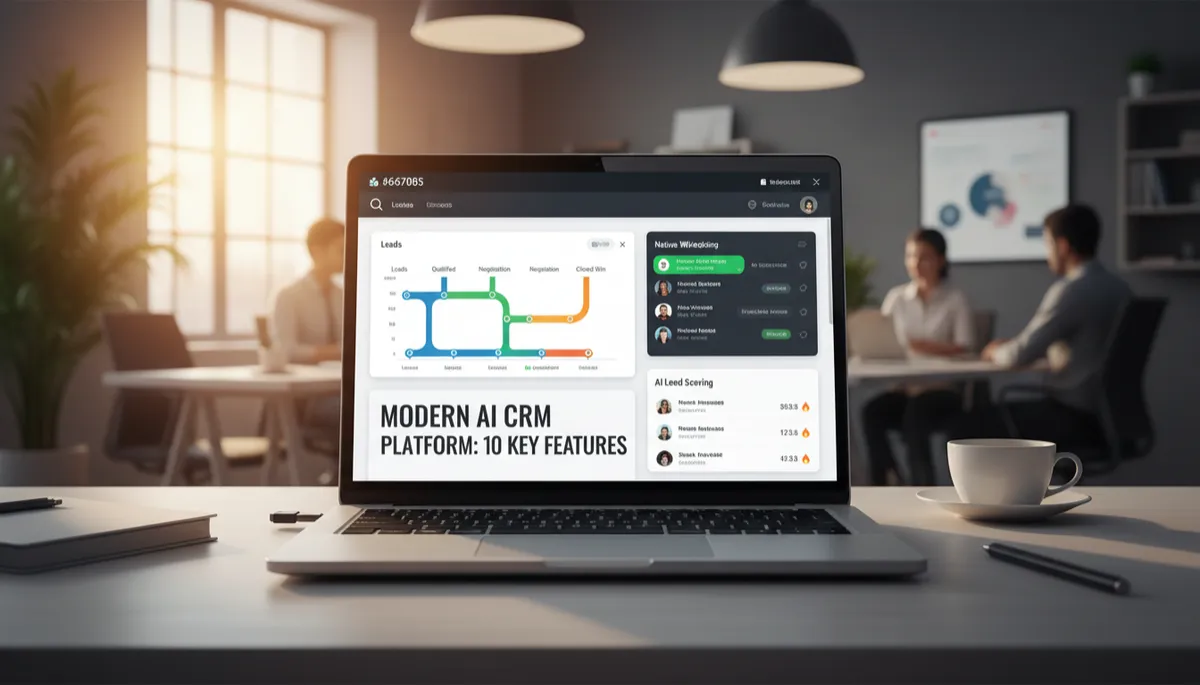
Modern AI CRM Features for 2026
CRM, AI CRM, Lead Automation, WhatsApp CRM, India SMB
What's Included in a Modern AI CRM Platform?
A modern AI CRM in 2026 is no longer a contact database. It's an intelligent revenue engine that scores leads, follows up automatically, books appointments, and protects your online reputation while you run the business. But with hundreds of platforms now labeling themselves "AI," you need to know what genuine AI CRM features actually look like versus marketing fluff—especially before you commit your small business budget for the next few years.
What's Included in a Modern AI CRM Platform in 2026?
When people search for what's included in a modern AI CRM platform, they usually expect a long modern CRM features list—email, pipeline, reports, maybe a chatbot. That's the old definition. In 2026, the best AI CRM features go much further: they act on your data, automate multi-step workflows, and give you clear answers to simple questions like, "Which 10 leads should I call today?" and "How much revenue is likely to close this month?"
Industry research backs this shift. A recent Salesforce State of Sales report shows that 83% of sales teams using AI grew revenue, compared with 66% without it, and companies using AI CRM report around 30% higher win rates and 25% faster deal cycles 1. Another study highlighted that 32% of sales reps still spend over an hour per day on manual data entry instead of selling 2. The gap between AI-powered and "spreadsheet with a chatbot" keeps getting wider—and it directly affects your revenue as an Indian SMB owner.
The AI Label Problem: Why Definitions Matter for Indian SMBs
The CRM market is crowded, fragmented, and noisy. Surveys such as the Freshworks 2024 CRM statistics report show that most businesses now have some form of CRM, and vendors are racing to attach "AI" to their landing pages 3. The problem is simple: a lot of what is sold as "AI CRM" is just a basic contact manager with a generic chatbot bolted on top. It can answer FAQs, but it can't change your revenue outcomes in a reliable, measurable way.
In 2026, the biggest shift is from AI that merely suggests to AI that actually acts. Research published on PMC/NIH and ScienceDirect around AI in CRM consistently highlights that systems with deeper data integration and autonomous decision-making deliver stronger business impact than isolated bots or assistants 4,5. For small businesses in India—coaches, clinics, agencies, real estate firms, training institutes—this difference is the line between "nice to have" and "this paid for itself in 60 days."
Native AI vs Bolt-On AI — Why This Distinction Matters
Before we break down the 10 defining AI CRM features 2026 demands, you need one mental model: native AI versus bolt-on AI. This single distinction will save you from many expensive mistakes when comparing platforms, especially if you're evaluating an AI CRM for small business India for the first time.
What Is Bolt-On AI?
Bolt-on AI is when a CRM plugs a third-party chatbot or generic "AI assistant" into a legacy database. The bot may sit in a side panel, answer simple questions, or draft generic emails, but it doesn't truly understand your pipeline, your WhatsApp conversations, or your revenue targets. It has limited context, often pulls incomplete data, and usually requires separate logins or credits. As G2's 2026 buyer data puts it, "AI without context is just an expensive chatbot."
What Is Native AI?
Native AI is built into the core of the platform. It runs directly on your real-time CRM data—leads, deals, WhatsApp chats, emails, calls—and can both analyze and act on that data. Instead of just suggesting, it can:
- Automatically score new leads the moment they arrive.
- Trigger WhatsApp and SMS follow-ups based on behaviour, not just time delays.
- Book appointments into your calendar without manual intervention.
- Update deal stages and forecast numbers as conversations progress.
Bolt-on AI creates data silos, sync errors, and duplication. Native AI outperforms it on every meaningful metric—conversion rate, speed to lead, and time saved. That's why G2 now lists data integration depth as the single most important evaluation criterion for AI CRM platforms in 2026.
The 10 Features That Define a Genuine Modern AI CRM Platform
Let's walk through the 10 capabilities that separate a genuine AI CRM from a glorified contact manager. Use this as your modern CRM features list when evaluating vendors, especially if you want the best AI CRM features without wasting time on hype.
1. AI-Powered Lead Scoring
What it does: AI-powered lead scoring ranks every incoming lead by its probability to convert, using behavioural signals (link clicks, replies, time spent on page), form data (budget, location, service type), and engagement history across WhatsApp, SMS, and email. Instead of a static "hot/warm/cold" tag, it continuously recalculates as new data arrives.
Why it matters for Indian SMBs: Most small teams don't have the bandwidth to call every lead multiple times. With AI lead scoring, your team can focus on the top 20–30% of leads that are most likely to buy. That alone can lift revenue meaningfully—especially when combined with faster follow-up. Studies show that companies using AI CRM report significantly higher win rates and faster deal cycles, because reps are guided to the right actions at the right time 1,4.
2. Intelligent Workflow Automation
What it does: Intelligent workflow automation goes beyond simple "if status = new, send email" rules. It uses AI to trigger follow-ups, task assignments, and status updates based on customer behaviour—who opened your message, who clicked, who replied, who went silent for seven days, who visited your pricing page, and more. It also adapts timing and channels to maximise engagement.
Why it matters: Indian SMBs often operate with lean teams where one person handles marketing, sales, and service. Intelligent automation means the CRM works while you sleep. No leads fall through the cracks because the system keeps nudging them forward—booking calls, sending reminders, and escalating high-intent signals to you or your team. Considering that 32% of reps still lose an hour a day to manual data entry 2, this automation is not a luxury; it's how you reclaim selling time.
3. Native WhatsApp Integration with AI Auto-Responses
What it does: A modern AI CRM for small business India must treat WhatsApp as a first-class citizen. Native integration means every WhatsApp conversation is automatically captured as a contact and timeline in your CRM, with AI-generated, context-aware replies that can answer questions, share pricing, or qualify leads. It can route conversations to the right team member, apply tags, and update deal stages—all from WhatsApp threads your customers already use daily.
Why it matters: In India, WhatsApp is the primary business channel. India and APAC are the fastest-growing WhatsApp Business markets in 2026, and a CRM without native WhatsApp integration is effectively half a CRM for this region. Native AI on top of WhatsApp means instant responses, 24/7 lead capture, and no more manual copy-paste between your phone and your CRM. It also protects you from lost leads when team members change devices or numbers.
4. AI-Powered Appointment Booking
What it does: AI-powered scheduling allows prospects to book appointments via WhatsApp, chatbot, or landing page. The AI checks your real-time calendar, proposes suitable slots, confirms bookings, sends reminders, and even handles rescheduling without your manual involvement. It can also route appointments to different team members based on service type, location, or language.
Why it matters: For clinics, consultants, salons, training institutes, and real estate agents in India, appointment management is a daily headache. AI scheduling cuts no-show rates with timely reminders and frees 3–5 hours per week from back-and-forth messages. It also makes your business look more professional and responsive—especially important when prospects are comparing options on Google and WhatsApp at the same time.
5. Multi-Channel Communication (SMS, Email, WhatsApp)
What it does: A modern AI CRM centralises all communication channels—SMS, email, and WhatsApp—into one unified inbox. AI then personalises messages based on customer stage, past behaviour, and preferences. For example, it may follow up high-intent leads via WhatsApp, nurture colder leads via email, and send time-sensitive OTPs or reminders via SMS, all from the same platform and contact record.
Why it matters: Many Indian businesses still juggle Gmail, WhatsApp Web, SMS tools, and Excel. That fragmentation guarantees missed messages and inconsistent follow-up. A unified, AI-driven inbox ensures every conversation is logged, every promise is tracked, and every lead receives consistent communication—without you switching between five tabs all day. This is a core expectation on any serious AI CRM features 2026 checklist.
6. Conversation Intelligence (Call/Chat Recording + AI Analysis)
What it does: Conversation intelligence automatically records and transcribes calls and chats, then uses AI to surface key themes—common objections, pricing questions, competitor mentions, and buying signals. It can flag at-risk deals, highlight successful talk tracks, and generate coaching insights without you needing to listen to every minute of every call yourself.
Why it matters: Most small business owners in India sell personally or manage a small sales team. You rarely have time to review calls, yet the quality of those conversations drives your revenue. Conversation intelligence turns those calls into structured data—what worked, what didn't, which scripts closed, which promises were made. This is exactly the kind of "AI that acts" researchers highlight: it doesn't just summarise, it suggests next steps and training opportunities 4,5.
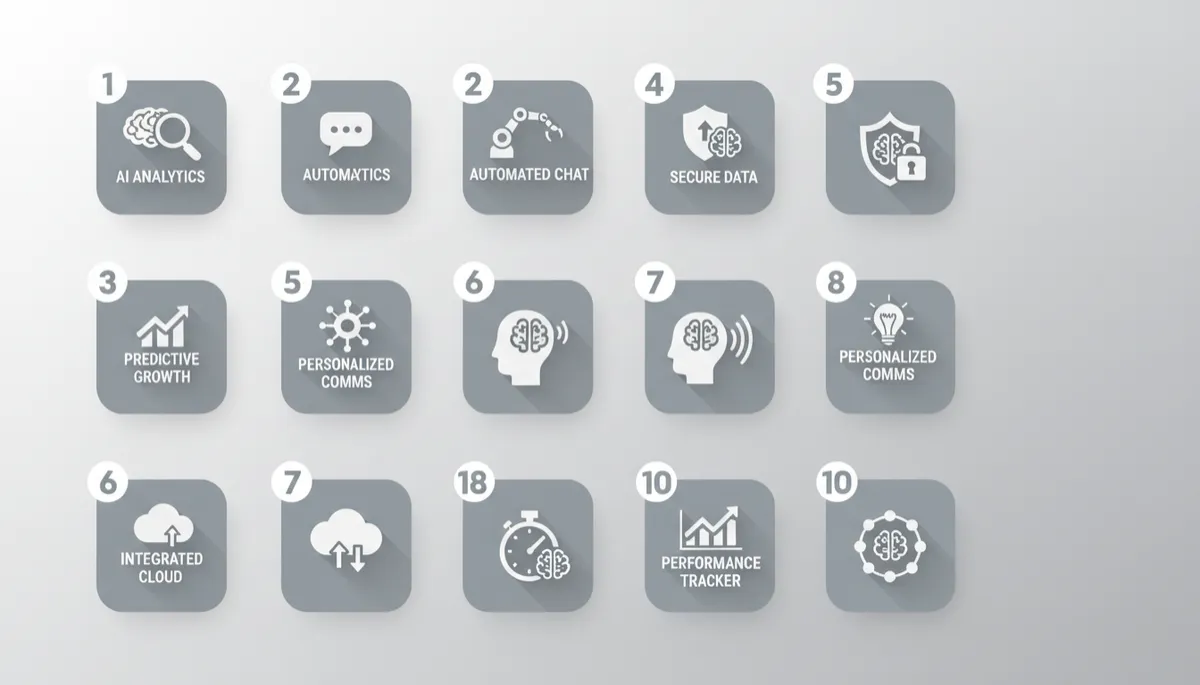
The right ten AI-native features turn your CRM into a true revenue engine.
7. AI-Generated Email and Message Drafts
What it does: Instead of staring at a blank screen, your CRM drafts follow-up emails, WhatsApp replies, and even proposal outlines based on the full context of your relationship with that contact. It knows what they asked, which pages they visited, what was promised on the last call, and what stage they're in. You simply review, tweak, and send—usually in seconds, not minutes.
Why it matters: Writing personalised, context-aware messages is one of the most time-consuming tasks in sales. AI-generated drafts can easily save 45 minutes per rep per day. For a founder-led sales team, that's 45 extra minutes you can spend actually talking to customers or improving your service instead of typing the same lines over and over again. It also improves consistency and tone across your team, which matters for brand perception and trust.
8. Automated Review and Reputation Management
What it does: After a service interaction—consultation, visit, project delivery—the CRM automatically sends Google review or testimonial requests via WhatsApp or SMS. AI personalises the request, follows up politely if there's no response, and routes negative feedback to you privately before it hits public platforms. It also tracks review volume and rating trends over time, so you can see the impact of your efforts.
Why it matters: Online reviews drive a huge share of buying decisions in India in 2026, especially in metro cities like Chennai, Bengaluru, and Mumbai. Yet most SMBs rely on "please leave us a review" at the end of a conversation—and then forget. Automated review management ensures you capture happy customers at the right moment, steadily growing your social proof while protecting your reputation from surprises. This is one of the fastest ways to see tangible ROI from AI CRM, because reviews directly impact lead volume and conversion rates.
9. Predictive Pipeline Forecasting
What it does: Predictive forecasting uses AI to analyse deal stages, engagement velocity, deal size, and historical patterns to predict which deals are likely to close this month, which are at risk, and where your final revenue number will probably land. It updates as new data comes in—emails opened, calls made, WhatsApp replies received—giving you a living forecast instead of a static spreadsheet guess.
Why it matters: Many Indian SMBs still run on gut feel: "This month should be okay." But as your team grows and your marketing spend increases, you need clarity—can we hire, can we invest, can we expand? Predictive forecasting turns your CRM into a decision-support system. Combined with the fact that 91% of SMBs using AI in their CRM report measurable revenue impact 1, this is a cornerstone capability, not a "nice to have."
10. Unified Analytics Dashboard
What it does: A unified analytics dashboard gives you a real-time view of leads, revenue, automation performance, WhatsApp response rates, and team activity—without exporting anything to spreadsheets. It shows which campaigns generate the best leads, which automation sequences actually convert, and where leads are dropping off in your funnel. AI can also surface anomalies and suggestions automatically, such as "follow-up delay is too long for hot leads" or "this WhatsApp template has above-average replies."
Why it matters: Data-driven decisions beat gut feel over time. With a unified dashboard, you don't have to be a data analyst to understand what's working. You can see, at a glance, whether your CRM is paying for itself and exactly which levers to pull next—more budget on high-performing campaigns, better scripts for weak stages, or new automations where humans are still doing repetitive work.
Features to Watch Out For (What to Avoid When Evaluating AI CRM)
Knowing what should be in a modern AI CRM platform is one side of the coin. The other side is recognising red flags that signal "AI label problem" rather than real value. Here are four warning signs to keep in mind when reviewing any modern CRM features list.
"AI" That's Just a Chatbot — No Data Context, No Lead Scoring
If the only visible "AI" is a chatbot that answers generic FAQs, you're not looking at a true AI CRM. Without deep access to your leads, deals, and communication history, the bot can't score leads, prioritise tasks, or forecast revenue. It might impress in a demo, but it won't move your numbers. Remember: AI that doesn't touch your pipeline is entertainment, not infrastructure.
Features Locked Behind the Next Pricing Tier
Many platforms advertise AI CRM features 2026 buyers expect—lead scoring, automation, conversation intelligence—but lock them behind expensive "Pro" or "Enterprise" plans, or charge per user. For Indian SMBs, this model becomes unaffordable as the team grows. The result: you end up using only basic contact management while paying for a plan "with AI" that you rarely touch. Look for platforms that include core AI features for all users, ideally without per-seat pricing.
WhatsApp as an External Integration (vs Native)
Some CRMs claim WhatsApp support but rely on third-party connectors, manual syncing, or separate tools. This is the "bolt-on AI" problem in messaging form. When WhatsApp is external, you risk message delays, sync errors, and missing context for AI. For Indian SMBs, where WhatsApp is mission-critical, insist on native integration: conversations, templates, and automations should live inside the CRM, not in a separate dashboard you'll forget to open.
Credit-Based AI Usage Limits
Another subtle trap is credit-based AI pricing: you get a limited number of AI emails, summaries, or predictions per month, and pay extra beyond that. This pushes teams to "save" AI for special cases instead of using it daily, which defeats the purpose. The real value of AI CRM comes from consistent, everyday automation—lead scoring on every lead, review requests for every customer, forecasting across every deal. Look for predictable, flat-rate models where AI is not rationed.
How RevMax Delivers All 10 Features for Indian Small Businesses
RevMax is designed from the ground up as an AI-first CRM for Indian service businesses—especially those built around leads, appointments, and repeat customers. Instead of stitching together separate tools, RevMax consolidates all 10 features into one platform, with native AI and native WhatsApp from day one.
- Native lead scoring: Every lead is automatically scored based on source, behaviour, and engagement, so you know who to call first each morning.
- End-to-end automation: From first WhatsApp message to booked appointment to review request, workflows run without manual chasing or copy-paste.
- WhatsApp AI from day one: Conversations, templates, and AI responses live inside RevMax, not in external tools, so data is always in sync and ready for analysis.
- Review management built-in: Every satisfied customer is automatically prompted to review, helping you steadily grow local authority on Google and social platforms.
- No per-seat pricing: RevMax uses a flat-rate model so you can add team members without worrying about escalating license costs or hidden AI credit limits.
Most small businesses that see strong AI CRM ROI start with one key workflow—lead follow-up, appointment booking, or review collection—and then expand. RevMax is intentionally designed to support this journey, especially for Indian SMBs in cities like Chennai, Coimbatore, and Hyderabad, where WhatsApp and mobile-first journeys dominate. To see these workflows in action without a long sales process, you can start directly at https://whatsapp.studio.revmaxapp.com/.
If you want deeper strategic guidance on how to align AI CRM with your revenue goals, firms like Revenue Mastery Consulting specialise in this space, with experts such as Avinash N U helping Indian businesses design end-to-end revenue systems rather than just tools.
Frequently Asked Questions
What's the difference between a traditional CRM and an AI CRM?
A traditional CRM is primarily a database and reporting system—it stores contacts, tracks deals, and shows you what happened. An AI CRM, by contrast, is a system of action. It scores leads, triggers personalised follow-ups, books appointments, requests reviews, and forecasts revenue using machine learning. Research from Salesforce and academic sources shows that teams using AI CRM features see materially higher win rates and faster cycles than those using traditional tools 1,4,5.
Do I need all 10 features, or just a few?
You don't have to use all 10 features on day one. Most successful Indian SMBs start with one core workflow—usually lead follow-up, appointment booking, or review collection—and then layer in more automation as they see results. However, choosing a platform that has all 10 features built in ensures you won't outgrow it in a year. You can activate capabilities as your team and revenue goals evolve, without migrating systems again and again.
Is WhatsApp integration a real AI feature or just messaging?
Basic WhatsApp integration is just messaging—you send and receive texts from a shared inbox. Real AI WhatsApp integration goes further: it captures leads automatically, triggers AI-powered auto-responses, qualifies prospects, books appointments, and feeds all of that data into lead scoring and forecasting. For an AI CRM for small business India, WhatsApp is where AI can have the fastest, most visible impact because it touches almost every customer journey.
How do I know if a CRM's AI is native or bolted on?
Ask a few practical questions:
- Does AI scoring, messaging, and forecasting work out of the box, or do I need extra tools and connectors?
- Is the "AI assistant" just a chat window, or does it actually create and update records, automations, and deals?
- If I turn off the AI module, does most of the system still behave the same?
Native AI is tightly integrated with your data and workflows; bolt-on AI feels like a separate app sitting on the side. Remember the G2 principle: "AI without context is just an expensive chatbot."
How quickly can a small team start seeing results from AI CRM features?
With the right platform and a focused rollout, many small teams see measurable impact within 30–60 days—especially if they start with one high-leverage workflow. For example, automating WhatsApp lead capture and follow-up can immediately increase contact rates and booked appointments. Over time, as predictive forecasting and review automation kick in, the compounding effect becomes clear. Salesforce SMB data suggests that 91% of small businesses using AI in their CRM report measurable revenue impact 1.
Closing Thoughts: Choosing the Right AI CRM for 2026 and Beyond
The platforms that grow small businesses in 2026 aren't the ones with the longest feature pages. They're the ones with the right 10 features, natively integrated, working together from day one. When you evaluate what's included in a modern AI CRM platform, look for:
- Native AI that acts, not just suggests.
- Deep data integration, especially around WhatsApp and multi-channel communication.
- Flat, transparent pricing with all core AI features included.
- A path to start small—one workflow, one team—and scale up without re-platforming.
For Indian SMBs, especially service businesses where every missed lead is lost revenue, the move from legacy CRM to AI-first CRM is no longer optional. It's how you keep up with changing buyer behaviour, rising expectations on WhatsApp, and competitors who are already automating their funnels end-to-end.
Direct CTA: See all 10 features in action with RevMax—no demo required. Start your AI-powered WhatsApp and CRM workspace at https://whatsapp.studio.revmaxapp.com/.
References & Links
- 1 Salesforce, "State of Sales 2026" — AI usage, win rates, and revenue impact. https://www.salesforce.com/resources/research-reports/state-of-sales/
- 2 CRM.org, CRM statistics 2026 — manual data entry time for sales reps (referenced in market summaries).
- 3 Freshworks, "CRM Statistics and Trends" (2024). https://www.freshworks.com/theworks/company-news/crm-statistics/
- 4 PMC/NIH, "Artificial Intelligence in Customer Relationship Management" (AI-CRM Study). https://pmc.ncbi.nlm.nih.gov/articles/PMC11382090/
- 5 ScienceDirect, "AI in CRM Research" — impacts of AI-first CRM architectures. https://www.sciencedirect.com/science/article/pii/S2444569X25000769