All-in-One CRM vs Multiple Tools: Why Chennai Businesses Are Switching to RevMax AI in 2026
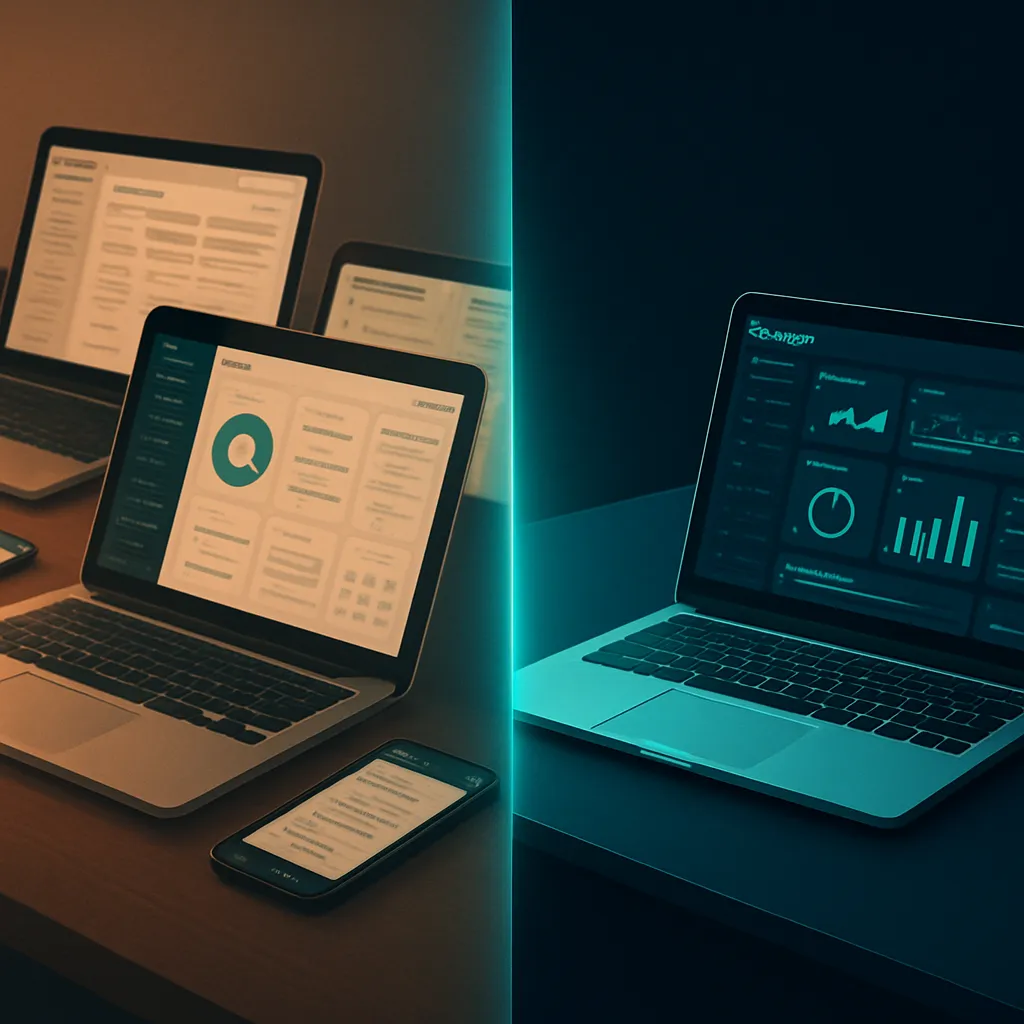
If you are running your Chennai business on a combination of separate tools — a CRM here, a WhatsApp API tool there, an email marketing platform, a booking system, a social media scheduler, and a landing page builder — you already know the friction. Data does not sync properly. Leads fall through the gaps between platforms. Your team logs into five different dashboards to do one job. Integrations break without warning. And you are paying subscription fees to multiple vendors for tools that were never designed to work together. This comparison of an all-in-one CRM platform versus a multi-tool stack will show exactly where the disconnected approach costs Tamil Nadu businesses more — in time, in missed leads, and in lost revenue — and why more Chennai businesses in 2026 are consolidating everything into RevMax AI.
The short answer: A multi-tool stack gives you specialised tools that each do one thing well but require constant maintenance, integration management, and manual data transfer to function as a system. An all-in-one platform like RevMax AI does everything in one place — WhatsApp automation, CRM, email marketing, appointment booking, social scheduling, landing pages, reputation management — with every piece of data connected, every workflow automated end-to-end, and zero integration failures. The operational difference is the difference between a system and a collection of tools.
The Typical Chennai Business Multi-Tool Stack
Most businesses arrive at something like this when they have pieced together a marketing and sales technology stack over time:
| Tool Category | Common Tool Used | What It Does |
|---|---|---|
| CRM | Zoho CRM / Freshsales | Stores lead data, tracks pipeline stages |
| WhatsApp API | Interakt / Wati / Zoko | Sends WhatsApp messages and broadcasts |
| Email Marketing | Mailchimp / Zoho Campaigns | Sends email newsletters and drip campaigns |
| Appointment Booking | Calendly / Zoho Bookings | Manages consultation and meeting bookings |
| Social Media Scheduler | Hootsuite / Buffer | Schedules posts across social platforms |
| Landing Page Builder | Unbounce / WordPress plugins | Builds campaign landing pages |
| Reputation Management | Separate tool or manual | Collects Google reviews |
| Chatbot | ManyChat / Tidio | Automates website or Messenger chat |
Each of these tools was added one at a time as the business grew. Each solved an individual problem when it was introduced. Together, they create a fragmented system where the whole is significantly weaker than the sum of its parts.
The 7 Real Problems With Running Multiple Tools
Problem 1: Your Data Lives in Seven Different Places
When a lead arrives from a Facebook Ad, their information might go into your CRM. But their WhatsApp conversation lives in Interakt. Their email engagement data lives in Mailchimp. Their appointment history lives in Calendly. No single view of the customer exists anywhere. When a salesperson needs to understand a lead's full journey before a consultation call, they have to manually check four or five different platforms and piece together the information themselves. This is a daily operational tax on your team's time and a consistent source of missed context that costs you conversions.
RevMax AI: Every piece of customer data — WhatsApp conversations, email engagement, appointment history, lead source, qualification answers — lives in a single unified dashboard. Your team sees the complete customer journey in one place, in 30 seconds, before every call.
Problem 2: Integrations Break — and You Lose Leads When They Do
A multi-tool stack depends on integrations — typically Zapier connections, API keys, or native connectors — to pass data between platforms. Every integration is a potential point of failure. When your Zapier connection between your Facebook Lead Ad and your CRM breaks at 11pm on a Friday, every lead that comes in over the weekend goes nowhere. Nobody is notified. Nobody follows up. By Monday morning, those leads are cold — and you have no idea how many you missed. Integration failures are not rare. They are a normal operational reality for any business running multiple tools connected by third-party bridges.
RevMax AI: There are no external integrations to break. Everything is built natively on one platform. WhatsApp conversations, CRM entries, email triggers, appointment bookings, and follow-up sequences all happen within the same system. No Zapier bridges, no API keys to manage, no third-party connectors to monitor.
Problem 3: Automation Cannot Cross Tool Boundaries
True end-to-end automation requires a single system where an action in one module can trigger an action in any other module — instantly, without delay, without a human pushing data from one tool to another. With a multi-tool stack, what should be a seamless flow actually requires multiple Zapier triggers, each introducing delay and failure risk. Every step between tools introduces delay, potential failure, and dependency on a human to manage the system.
RevMax AI: The complete sequence — lead arrives, WhatsApp reply in 60 seconds, AI qualification, Hot/Warm/Cold tagging, booking link, calendar sync, reminders, 30-day follow-up — runs within a single platform with zero external dependencies. No delays. No failures. No gaps.
Problem 4: Your Team Loses Hours Every Week Switching Between Platforms
A sales coordinator managing leads across Zoho CRM, Interakt, Mailchimp, and Calendly is context-switching dozens of times per day. In a Chennai service business with a team of 3 to 10 people, this translates to hours lost per week per person, mistakes made when copying data manually between systems, and leads forgotten because they exist in one tool and the relevant follow-up action lives in another.
RevMax AI: One login. One dashboard. Every function — messaging, pipeline management, email, booking, social, reporting — accessible from the same screen. Your team spends their time on customers, not on platform management.
Problem 5: You Are Supporting Multiple Vendor Relationships
Every tool in your stack has its own billing cycle, customer support team, onboarding requirements, and update cycle. When something goes wrong — a WhatsApp broadcast fails, an email campaign does not fire, a booking integration stops working — you are raising tickets with three different support teams, each pointing at the other as the source of the problem.
RevMax AI: One vendor. One support team in Tamil and English. One renewal. One team accountable for everything working together.
Problem 6: Your Reporting Is Fragmented and Incomplete
How many leads did you receive this month? How many converted to appointments? What was the conversion rate from ad click to sale? With a multi-tool stack, answering these questions requires pulling data from your CRM, WhatsApp platform, email tool, and booking system — and manually assembling them into a coherent picture. Most Chennai businesses simply do not do this, which means they are making marketing and sales decisions on incomplete information.
RevMax AI: A unified reporting dashboard shows your complete pipeline — lead source, lead volume, qualification rate, appointment booking rate, show-up rate, and revenue attribution — all from a single screen, in real time, every morning.
Problem 7: New Team Members Take Weeks to Onboard Across Multiple Platforms
When a new sales executive joins your team, they need to be trained on every tool in your stack. This onboarding takes days to weeks and creates a period of reduced productivity while the new team member gets up to speed.
RevMax AI: One platform. One training process. A new team member can be productive from day one because everything they need is in a single, intuitive dashboard.
RevMax AI vs the Multi-Tool Stack: Feature Comparison
| Capability | Multi-Tool Stack | RevMax AI All-in-One |
|---|---|---|
| WhatsApp Automation | Interakt / Wati — separate tool, separate billing | ✅ Built-in, Official API, AI-powered |
| CRM + Pipeline | Zoho CRM / Freshsales — separate tool | ✅ Built-in, visual pipeline |
| Email Marketing | Mailchimp / Zoho Campaigns — separate tool | ✅ Built-in, drip + broadcasts |
| Appointment Booking | Calendly / Zoho Bookings — separate tool | ✅ Built-in, Google Calendar sync |
| Social Media Scheduler | Hootsuite / Buffer — separate tool | ✅ Built-in, FB + IG + LinkedIn + TikTok + X |
| Landing Page Builder | Unbounce / WordPress — separate tool | ✅ Built-in, drag-and-drop |
| AI Lead Qualification | ManyChat / separate chatbot — extra cost | ✅ Built-in, conversational AI bot |
| Reputation Management | Separate review tool | ✅ Built-in, automated review requests + GMB |
| Data sync across all tools | ⚠️ Via Zapier — delay + failure risk | ✅ Native — instant, always in sync |
| End-to-end automation | ⚠️ Partial — breaks at tool boundaries | ✅ Complete — single platform, zero gaps |
| Unified reporting | ❌ Manual assembly from multiple dashboards | ✅ Single live dashboard — full funnel view |
| Support | Multiple vendors, multiple SLAs | ✅ One team, Tamil + English |
| Setup time | Weeks — each tool separately | ✅ 48 hours, done for you |
| Integration failure risk | ⚠️ High — multiple Zapier connections | ❌ Zero — no external integrations |
| Team onboarding | Multiple platforms to learn | ✅ One platform, one learning curve |
The Integration Gap: Where Chennai Businesses Lose the Most Leads
The most expensive problem with a multi-tool stack is not the time lost to platform switching or the complexity of managing multiple vendors. It is the lead response gap that occurs at the boundary between tools.
Here is the most common scenario for a Chennai business running separate tools: A lead fills a Facebook Lead Ad form at 9:15pm. The Zapier connection between Facebook and the CRM runs on a 5-minute delay — the lead enters the CRM at 9:20pm. A second Zap pushes the lead to Interakt — by 9:23pm. Interakt fires a WhatsApp message — the lead receives it at 9:24pm. By 9:24pm, the lead has been waiting 9 minutes. Research shows 80% of leads go cold in this window. If any Zap fails — a common occurrence — the lead receives no message at all.
With RevMax AI, the same lead receives a WhatsApp message in 60 seconds. No Zaps. No delays. No failure windows. Every single lead, every single time.
When a Multi-Tool Stack Makes Sense
- Large enterprise businesses with dedicated IT and operations teams to manage integrations, monitor failures, and maintain each tool.
- Highly specialised requirements that no single platform covers — for example, a business that needs an industry-specific CRM for regulatory compliance alongside a separate marketing automation tool.
- Businesses already deeply embedded in one ecosystem, such as the full Zoho One suite, where individual tools integrate more natively.
- Technical teams who prefer best-of-breed individual tools and have the bandwidth to build and maintain custom integrations.
For most Chennai SMBs with 1 to 50 team members managing 50 to 500 leads per month, the multi-tool stack was not chosen for strategic reasons. It was assembled one tool at a time as problems arose, and it has stayed in place because switching feels risky. The result is operational complexity that actively hurts conversion rates.
Real-World Scenario: A Chennai Coaching Institute Switching to RevMax AI
A coaching institute in Velachery runs Facebook and Google Ads generating 150 student enquiries per month. Their current stack: Zoho CRM, Interakt, Mailchimp, Calendly, and Hootsuite. Five tools, five subscriptions, five logins.
With the multi-tool stack: Leads sync to Zoho via Zapier with a 5 to 10 minute delay. A team member manually messages each lead in Interakt. Email follow-ups are set up manually in Mailchimp. Counselling sessions are scheduled by sharing a Calendly link manually. On Friday evening, the Zapier connection between Facebook and Zoho breaks. 23 leads that arrive over the weekend receive no WhatsApp message. By Monday morning, most have already enrolled elsewhere.
With RevMax AI: Lead arrives from Facebook Ad at 10pm on a Friday. WhatsApp reply fires in 60 seconds — automated. AI bot qualifies: which course, which batch, current exam level, budget, preferred timing. Hot lead receives a counselling booking link and books a Saturday morning session. Day 3 and Day 7 follow-up messages fire automatically for non-responsive leads. Social media posts scheduled from the same dashboard. Monday morning: the admissions team sees a live pipeline — 150 leads, 52 qualified, 28 counselling sessions booked, 14 enrolled. Zero platform switching. Zero Zapier failures. Zero missed weekend leads.
RevMax AI vs Multi-Tool Stack: Final Summary
| Criteria | Multi-Tool Stack | RevMax AI All-in-One |
|---|---|---|
| Data connectivity | Fragmented — multiple databases | ✅ Unified — one data source |
| Automation completeness | Partial — breaks at tool boundaries | ✅ End-to-end — single platform |
| Lead response speed | 5 to 30+ minutes — Zapier delays | ✅ 60 seconds — always |
| Integration failure risk | High — multiple connection points | ✅ Zero — no external integrations |
| Reporting visibility | Manual assembly — incomplete | ✅ Live, complete, single dashboard |
| Team productivity | Context-switching between platforms | ✅ Single platform, single workflow |
| Vendor management | Multiple vendors, multiple SLAs | ✅ One vendor, one support team |
| Setup complexity | High — each tool separately | ✅ 48 hours, done for you |
| Onboarding new staff | Multiple platforms to learn | ✅ One platform, fast onboarding |
| Local language support | Varies by tool | ✅ Tamil + English |
| After-hours lead handling | Dependent on integration reliability | ✅ Automated, guaranteed, 24/7 |
Frequently Asked Questions
Is an all-in-one CRM better than multiple tools for a small business in Chennai?
For most Chennai SMBs with 1 to 50 team members generating 50 to 500 leads per month, an all-in-one platform is significantly more effective than a multi-tool stack. The primary reasons are instant, reliable automation without integration gaps, unified data that gives complete customer visibility, and lower operational overhead from managing multiple vendors and platforms.
What tools does RevMax AI replace for a Chennai business?
RevMax AI replaces Zoho CRM or Freshsales for pipeline management, Interakt or Wati for WhatsApp automation, Mailchimp for email marketing, Calendly for appointment booking, Hootsuite for social media scheduling, Unbounce for landing pages, ManyChat for AI chatbots, and separate review management tools. All of these functions are included natively in one platform.
What happens to leads when a Zapier integration breaks between tools?
When a Zapier connection fails between a Facebook Lead Ad and a CRM or WhatsApp platform, leads that come in during the failure window receive no automated response and may not enter the pipeline at all. This is a silent failure — the business often does not know how many leads were missed. RevMax AI eliminates this risk by handling the complete flow within one platform with no external integration dependencies.
How long does it take to switch from a multi-tool stack to RevMax AI?
RevMax AI is fully operational in 48 hours with done-for-you setup. The RevMax AI team handles WhatsApp API approval, AI bot training, pipeline configuration, workflow building, and ad account integration. Existing lead data can be imported via CSV or API.
Will I lose data if I switch from my current tools to RevMax AI?
No. Existing contacts and lead data can be imported into RevMax AI via CSV upload, API connection, or Zapier integration. Your historical data migrates into the new pipeline, and all future leads flow directly into RevMax AI from your ad accounts and WhatsApp number from day one.
Does RevMax AI integrate with tools I already use?
Yes. RevMax AI has 200+ integrations including Zapier, Stripe, Google, Meta, and more, with full API access and webhooks. For businesses that need to keep specific tools, RevMax AI can connect to them while still handling the core CRM, WhatsApp, email, booking, and automation functions natively.
Is an all-in-one platform less flexible than specialised individual tools?
For most Chennai SMBs, the flexibility of specialised tools is a theoretical benefit that rarely materialises in practice. The average small business uses 10 to 20% of each specialised tool's features. RevMax AI covers the features that actually matter for lead generation and conversion — and does so within a connected system where every feature enhances every other feature.
See RevMax AI in Action
If you are currently managing 4 or more separate tools and feeling the friction — switch to one connected platform that does everything better together.
- Watch RevMax AI handle a complete lead journey live — no signup required: studio.revmaxapp.com/live-demo
- Book a free 15-minute demo: studio.revmaxapp.com/book-demo
- See all 15+ features in one platform: studio.revmaxapp.com/features